
The All-on-4 implantation is nowadays one of the most modern and popular dental solutions for treating complete tooth loss. The method makes it possible for the patient to receive a fixed full denture with the help of just four dental implants.
In cases of complete edentulism, a traditional removable denture can be a temporary and cost-effective solution, but for many patients it is uncomfortable, unstable, and not always aesthetically satisfying. A full-arch bridge fixed on implants, on the other hand, is stable, natural-looking, and significantly improves quality of life.
One of the greatest advantages of All-on-4 dental implantation is that in many cases a temporary fixed denture is made on the day of surgery, so the patient does not remain without teeth during the healing period.
In this detailed guide, we will cover:
- what the All-on-4 implantation protocol is
- the causes of tooth loss
- who we recommend the treatment for
- the implantation and treatment process
- advantages and disadvantages
- how much the All-on-4 treatment costs
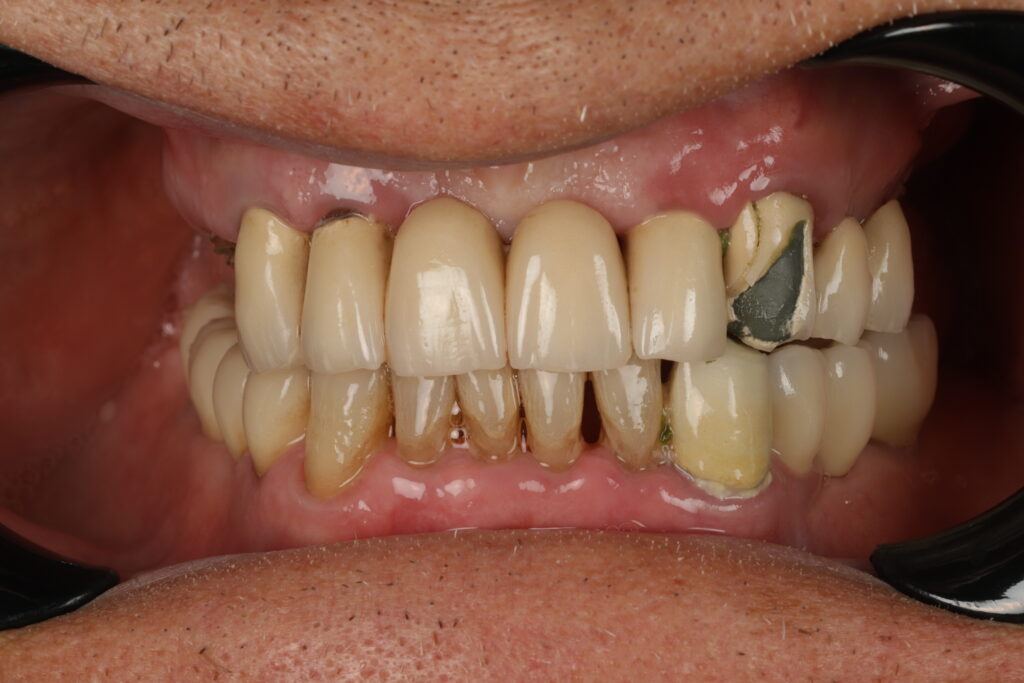
What is All-on-4 implantation?
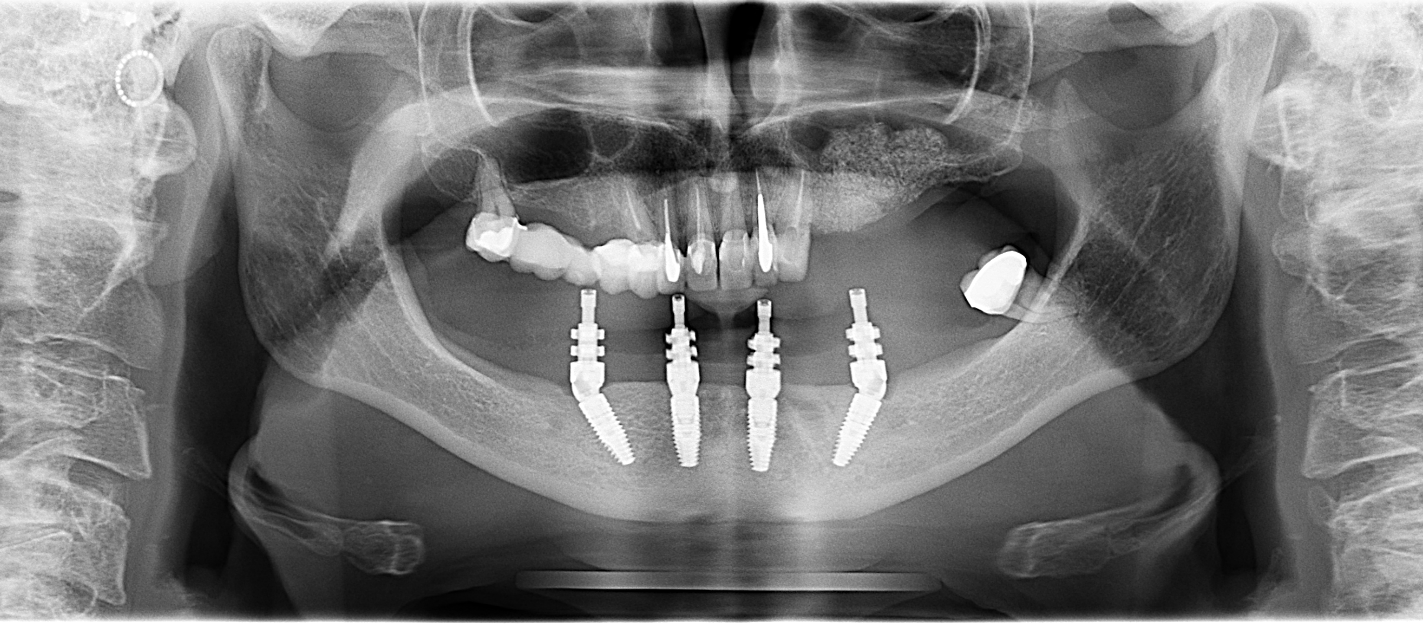
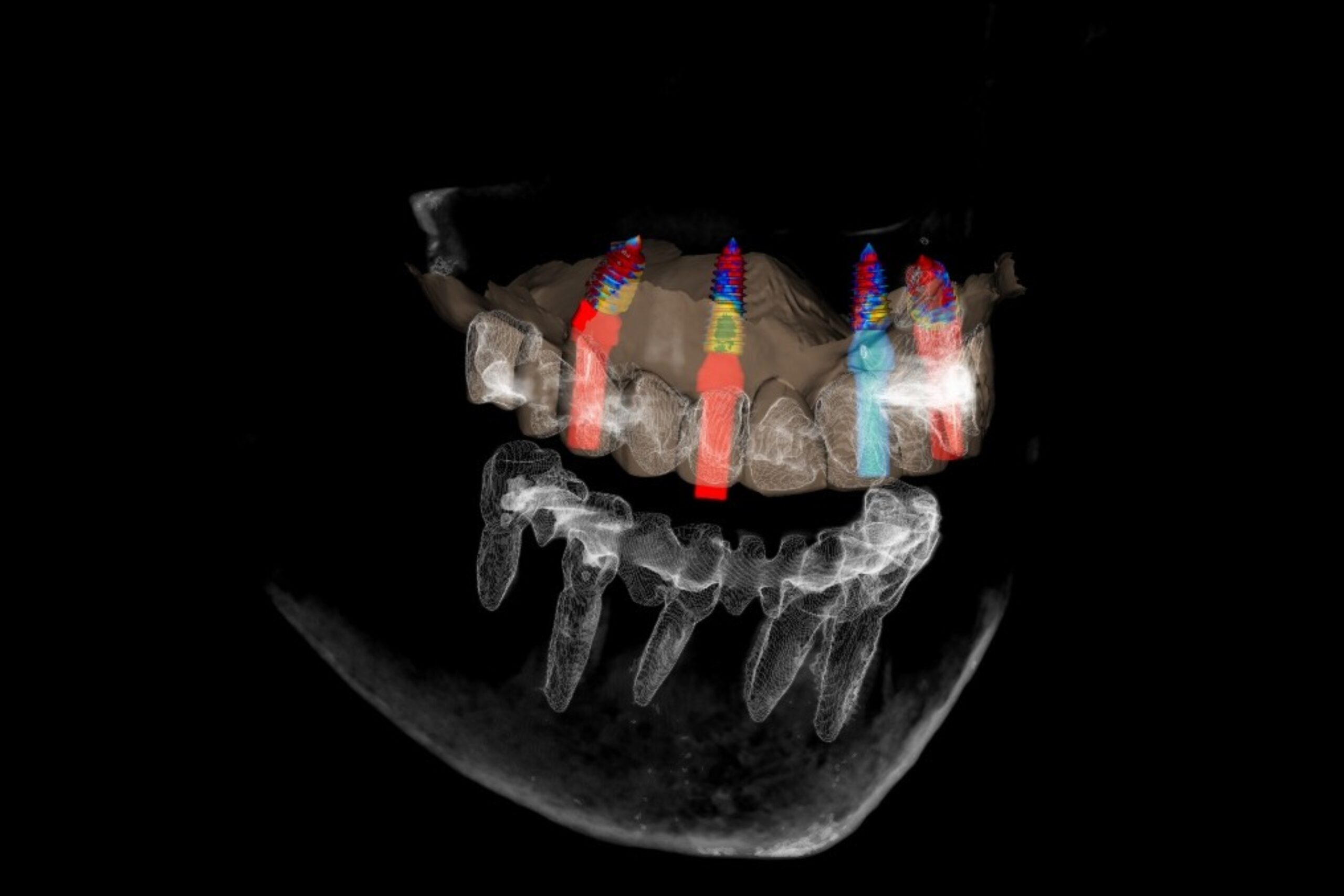
During the All-on-4 technique, four implants are placed into the jawbone, onto which a so-called full-arch bridge (a fixed prosthesis replacing all teeth) is secured. The two front implants are placed vertically, while the two rear implants are placed at an angle.
This technique makes it possible to create a fixed dental prosthesis with fewer implants, faster treatment and healing time, and often without bone grafting.
Implant positioning
The uniqueness of All-on-4 lies in the positioning of the implants:
- two implants in the front of the jawbone
- two implants at a tilted angle in the rear area
Since the rear implants are placed at a tilted angle, bone grafting can often be avoided, which is most commonly needed in the posterior areas.
This concept is particularly useful for patients who have already experienced significant bone loss.
Why does complete tooth loss occur?
Complete tooth loss can develop for several reasons. One of the most common causes is periodontitis, also known as gum recession or periodontal disease. This chronic inflammation gradually destroys the bone supporting the teeth, which eventually leads to tooth loss. In addition, tooth decay also plays a significant role in tooth loss. In cases of advanced tooth decay (caries), teeth often cannot be saved and their removal may become necessary. The lack of regular dental check-ups can lead to serious dental problems in the long run. Tooth loss can also be caused by accidents and traumatic injuries that result in broken or knocked-out teeth.
In cases of extensive tooth loss, the best solution is often an implant-supported dental prosthesis.
Who is All-on-4 implantation recommended for?
The All-on-4 dental implantation is primarily recommended for patients who have complete or near-complete tooth loss. Age alone does not affect the treatment.
In cases of complete tooth loss
If there are no teeth remaining on a jawbone, All-on-4 makes it possible to secure a full set of teeth.
In cases of multiple tooth loss
If the remaining teeth can no longer be saved, an implant-supported denture can be made after their removal. Unfortunately, it is common that due to periodontal disease or tooth decay, all teeth are beyond saving, or only 2-3 teeth could be saved, which are not enough to support a proper prosthesis.
In cases of an inadequate removable denture
Many people wear traditional removable dentures that can shift, wobble during chewing, become unstable during speech, or are simply uncomfortable. An implant-supported denture provides a more stable and natural feeling.
In cases of reduced bone volume
Due to the tilted placement of implants, implantation can often be performed without bone grafting.
How does the All-on-4 implant placement work?
- Consultation and diagnostics
The first step of treatment is a detailed assessment and planning:
- examination of the oral cavity and teeth condition
- taking photos for planning (smile design)
- CBCT (3D CT) scan
- digital impression taking
- digital planning
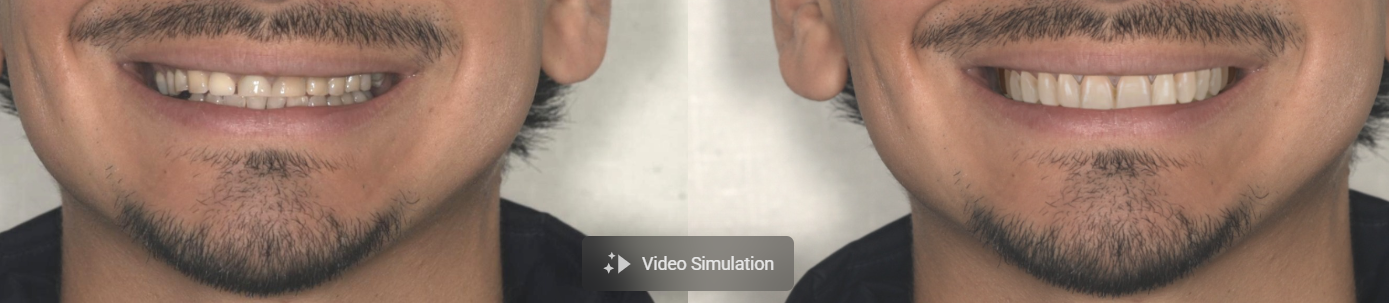
Digital planning is essential; it helps ensure accurate and safe implant placement.
- Creating the treatment plan
After diagnostics, the dentist prepares the individual treatment plan.
This includes:
- the type and positioning of implants
- the material of the prosthesis
- the duration of treatment
- and its costs
- Implant placement
The procedure is usually performed under local anesthesia and takes approximately 1-2 hours:
If needed, sedation or general anesthesia can also be applied.
During the surgery, four implants are placed into the jawbone. This can also be done as immediate implantation, meaning directly into the sites of extracted teeth.
Sometimes we use a surgical guide, which is digitally designed beforehand, allowing the implants to be placed precisely in the pre-planned position. This is particularly important in cases where very little bone is available.
Following this, the appropriate abutments are connected (screwed) into the implants.
- Temporary denture fabrication
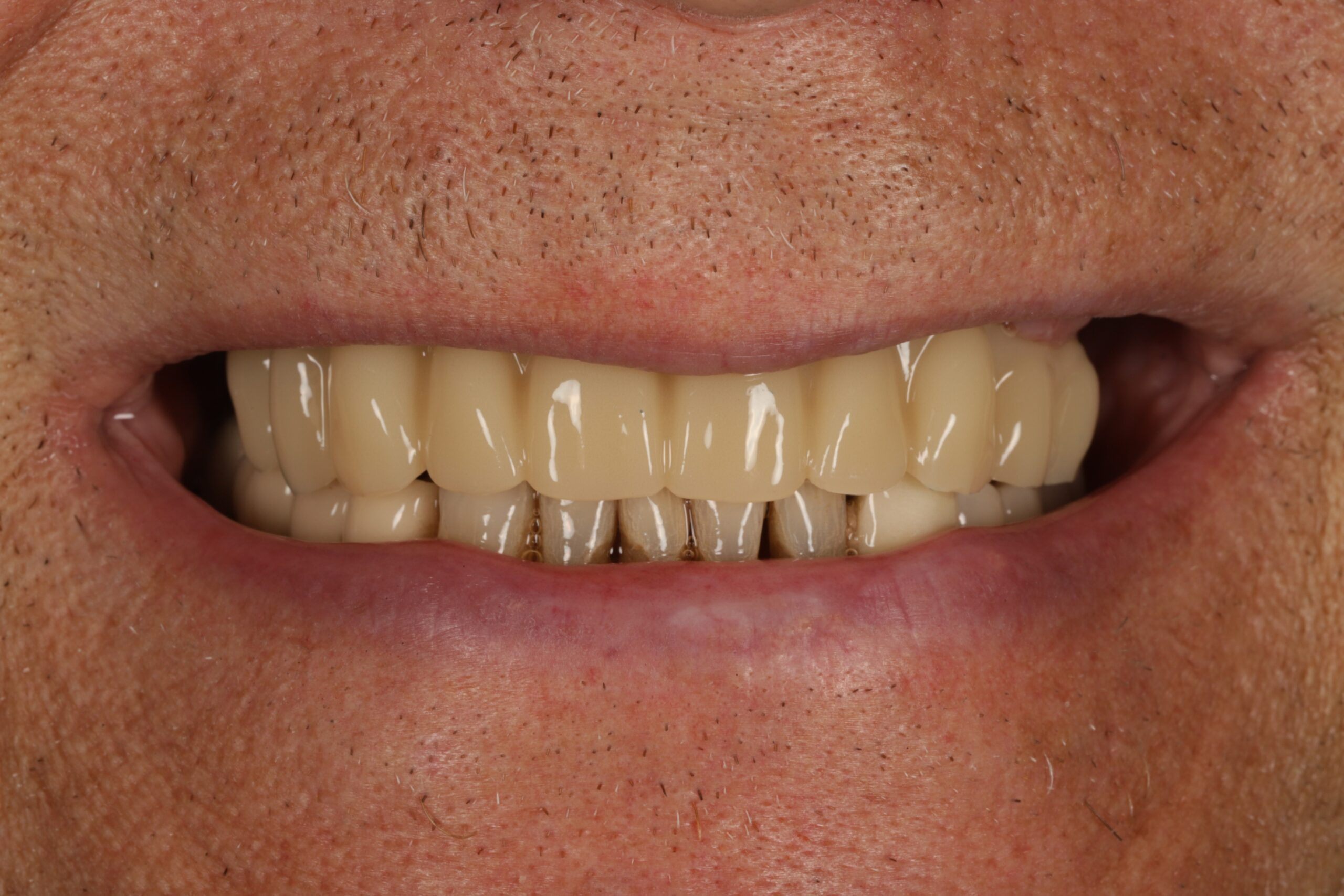
In most cases, the patient receives a temporary, fixed prosthesis on the day of surgery.
Digital impression taking is followed by the dental laboratory fabricating the temporary acrylic (PMMA – polymethyl methacrylate) prosthesis, which is placed in the mouth a few hours later. In every case, we create a screw-retained prosthesis.
This helps our patients smile, speak, and chew with confidence.
- Healing period
After the surgery, facial swelling may occur for a few days; any pain can be effectively managed with painkillers. The wound heals within 5-7 days. Osseointegration (bone fusion) of the implants typically takes 3-4 months.
- Final prosthesis
After the healing period, the final prosthesis is made, which can be fabricated from zirconia, titanium-zirconia, or metal-ceramic materials. The final prosthesis is extremely durable and aesthetic.
This is typically:
- zirconia
- zirconia on titanium framework
- or metal-ceramic
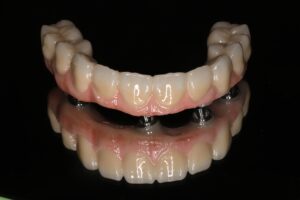
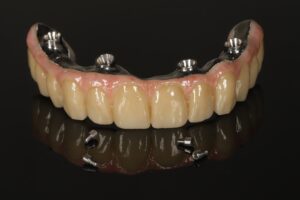
In our clinic, final prostheses are most commonly made from so-called multilayer zirconia, which, thanks to its various color transitions, can achieve a lifelike aesthetic result. Another advantage over prostheses made with ceramic veneering is that there is no risk of the veneering material (porcelain) chipping. True gum adhesion only forms on titanium and zirconia, which helps prevent
future problems and inflammation (peri-implantitis)
It is important to note that we always create screw-retained prostheses. One advantage of this is that the prosthesis can be periodically unscrewed for inspection, and minor damages can be repaired. Another advantage is that this eliminates the use of cement, which can easily remain under the gums and cause inflammation.
Advantages of the All-on-4 concept
The All-on-4 technique offers numerous advantages.
Stable and fixed denture
An implant-supported denture does not shift during chewing or speaking — it feels just like your own teeth.
Fast treatment
In many cases, a temporary denture is made within a single day. A few months later, the final prosthesis can be completed in as few as two visits (digital impression and delivery).
Fewer implants needed
Only four implants are needed to replace a full set of teeth.
Bone grafting is often not required
The tilted implants allow optimal utilization of the available bone.
Natural appearance
Thanks to their materials, modern prostheses are extremely aesthetic and natural-looking.
Are there disadvantages to All-on-4 implantation?
Although the All-on-4 technique comes with many advantages, it is important to be aware of certain factors.
- the treatment can be more expensive
- healing time is required due to the surgical procedure
- proper oral hygiene is essential
- cleaning a fixed prosthesis is more difficult than a removable one
- if there is a problem with one implant, the prognosis of the entire prosthesis becomes questionable
The key to success is proper planning and an implantologist with adequate experience.
How much does All-on-4 implantation cost?
The cost of All-on-4 implantation depends on several factors:
- the brand/type of implant
- the material of the prosthesis
- any additional treatments needed (bone grafting)
- the dental clinic’s technology (digital technologies, dental laboratory infrastructure)
The cost of All-on-4 treatment is typically several million Hungarian forints; this is a significant investment, but it provides a stable and long-lasting solution in the long run.
Many clinics advertise themselves with seemingly cost-effective prices; they achieve this by using cheap materials (acrylic final prostheses) and working with outdated laboratory infrastructure (non-digital, imprecise workflows).
How durable are the implants?
With proper oral hygiene, implants can last 15-20 years or even a lifetime. Regular check-ups, scaling, and maintaining proper oral hygiene are important.
For long-lasting results, it is important to:
- brush teeth twice daily
- clean the areas under the prosthesis and around the implants
- use specialized cleaning tools
- attend regular dental check-ups
- have regular professional oral hygiene treatments
Frequently asked questions about All-on-4 implantation
Is the implantation painful?
The procedure is performed under local anesthesia, so the patient generally does not feel any pain. Post-surgical pain can be effectively managed with painkillers and subsides after a few days.
How long does the treatment take?
The implant placement is completed in one day — on that day, the surgery takes 1-2 hours and the patient leaves with a fixed prosthesis the same day. The complete treatment typically takes 3-6 months.
When is implantation not recommended?
- in cases of certain general health conditions
- uncontrolled diabetes
- heavy smokers
Summary
The All-on-4 implantation is a modern, stable, and long-term solution for treating complete tooth loss. With just four implants, a complete, fixed dental prosthesis can be created that provides a natural appearance and comfortable chewing function.
Thanks to modern implantology technologies, many patients receive a fixed temporary denture on the day of surgery, allowing them to quickly regain their smile, confidence, and their old life.
If you are looking for a stable, aesthetic, and durable solution for replacing your teeth, it is worth inquiring about the possibility of All-on-4 implantation during a consultation.